

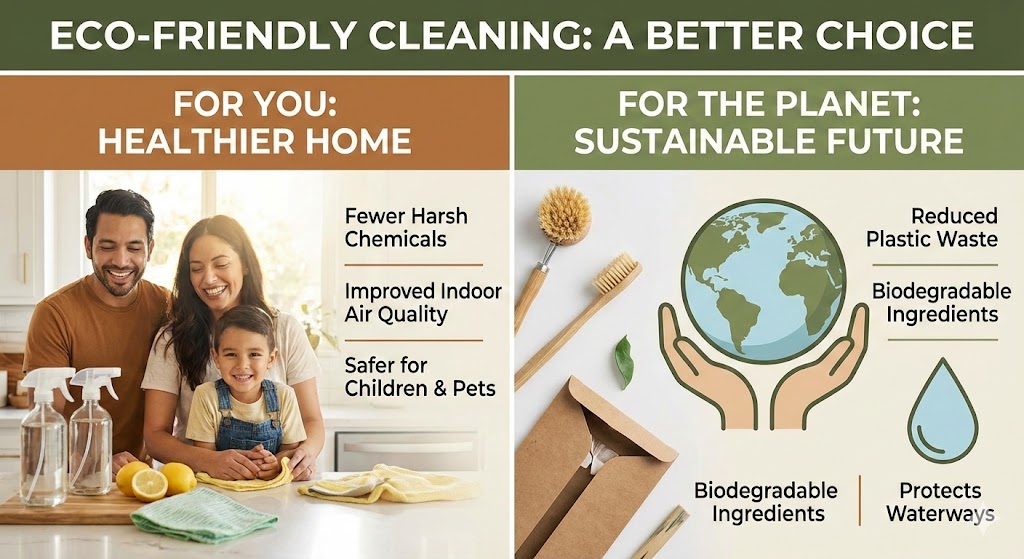
In today’s world, more people are searching for safer, healthier, and more sustainable ways to care for their homes. Traditional cleaning products may seem effective, but many contain harsh chemicals that can pollute the environment and harm human health over time. Eco-friendly cleaning offers a better alternative—one that protects your family, your home, and the planet.
Let’s explore why making the switch to eco-friendly cleaning products and habits is one of the smartest choices you can make.
What Is Eco-Friendly Cleaning?
Eco-friendly cleaning refers to using products and methods that:
- Are made from natural or plant-based ingredients
- Produce fewer toxins
- Reduce waste
- Have minimal environmental impact
- Are safer for people, pets, and the planet
This includes biodegradable cleaners, reusable cleaning tools, refillable containers, and homemade cleaning solutions.
Why Eco-Friendly Cleaning Is Better for Your Health
1. Fewer Harmful Chemicals in Your Home
Many conventional cleaners contain ingredients like ammonia, bleach, formaldehyde, and synthetic fragrances. These chemicals can cause:
- Irritated skin or eyes
- Headaches and respiratory issues
- Allergic reactions
- Long-term health risks
Eco-friendly alternatives use safe, non-toxic ingredients such as vinegar, baking soda, essential oils, and plant-based soaps—keeping your home clean without exposing your family to harsh chemicals.
2. Improved Indoor Air Quality
Indoor air can be more polluted than outdoor air, especially when toxic cleaners release fumes and volatile organic compounds (VOCs). Natural cleaners produce little to no VOCs, which means:
- Cleaner, fresher indoor air
- Fewer breathing problems
- Reduced risk for asthma triggers
Better air equals a healthier home.
3. Safer for Children and Pets
Kids and pets are especially vulnerable because they spend more time on floors, furniture, and surfaces. Eco-friendly products lower the risk of accidental poisoning or skin irritation. They’re gentle, yet still powerful enough to clean effectively.
Why Eco-Friendly Cleaning Is Better for the Planet
1. Reduces Water and Air Pollution
When conventional cleaners wash down the drain, they can contaminate rivers, lakes, and oceans. Non-biodegradable chemicals harm aquatic life and affect the ecosystem. Eco-friendly products break down naturally, minimizing harmful environmental impact.
2. Less Plastic Waste
Many sustainable brands use:
- Refillable bottles
- Concentrated formulas
- Compostable packaging
- Bulk refills
Reducing plastic waste is a major win for the planet, especially when millions of cleaning product containers end up in landfills each year.
3. Sustainable, Plant-Based Ingredients
Eco-friendly products are often made from renewable resources like:
- Coconut oil
- Corn-based alcohol
- Essential oils
- Natural minerals
These ingredients come from sustainable farming practices, unlike synthetic chemicals that require heavy manufacturing and fossil fuels.
How Eco-Friendly Cleaning Benefits Your Home
1. Leaves Fewer Residues
Traditional cleaners can leave chemical residues on:
- Counters
- Appliances
- Floors
- Food surfaces
Eco-friendly ingredients clean without leaving behind sticky films or toxins, making your home feel fresher and safer.
2. Keeps Surfaces in Better Condition
Gentle natural cleaners reduce wear and tear on surfaces like wood, tile, stainless steel, and fabric. They help preserve your home’s materials, making them last longer.
3. Natural Scents Instead of Chemical Fragrances
Many cleaners use synthetic fragrances that irritate allergies and sensitivities. Eco-friendly alternatives often use essential oils, giving your home a clean, natural aroma without artificial chemicals.
Common Eco-Friendly Cleaning Ingredients (and What They Do)
Vinegar
Cuts through grease, removes odors, kills bacteria.
Baking Soda
Scrubs surfaces, deodorizes, lifts stains.
Castile Soap
Gentle, plant-based soap for dishes, counters, and floors.
Lemon
Natural antibacterial and fresh scent booster.
Essential Oils (Lavender, Tea Tree, Lemon)
Add pleasant scents and antibacterial properties.
Hydrogen Peroxide
Eco-friendly alternative to bleach.
Easy DIY Eco-Friendly Cleaning Recipes
1. All-Purpose Cleaner
- 1 cup vinegar
- 1 cup water
- 10 drops lemon or lavender essential oil
Use on counters, glass, and appliances.
2. Natural Bathroom Scrub
- ½ cup baking soda
- A few drops of water
- Optional: a few drops tea tree oil
Apply to sinks, tubs, and showers.
3. Grease-Cutting Kitchen Spray
- 1 tablespoon castile soap
- 2 cups warm water
- 10 drops orange essential oil
Great for stovetops and cabinets.
How to Start Switching to Eco-Friendly Cleaning
- Replace one product at a time—like all-purpose spray or dish soap.
- Use up what you already own before buying new products.
- Look for labels like “biodegradable,” “phosphate-free,” and “plant-based.”
- Buy in bulk or choose refillable bottles.
- Try DIY recipes for low-cost, natural cleaning solutions.
Small steps lead to big changes.
The Long-Term Benefits of Eco-Friendly Cleaning
Switching to eco-friendly cleaning doesn’t just provide short-term health benefits. Long-term, you’ll notice:
- A cleaner, safer home environment
- Lower exposure to toxins
- Reduced carbon footprint
- Less waste and pollution
- Savings from reusable and DIY products
- Peace of mind knowing you’re making healthier choices
It’s a lifestyle shift that supports both your well-being and the world around you.
Final Thoughts
Eco-friendly cleaning is more than a trend—it’s a powerful movement toward healthier living and environmental protection. By choosing natural products, reducing plastic waste, and embracing sustainable habits, you’re contributing to a safer home and a cleaner planet.
Every small change counts. Whether you buy eco-friendly products or make your own, you’re making a positive impact that your future self—and the Earth—will thank you for.